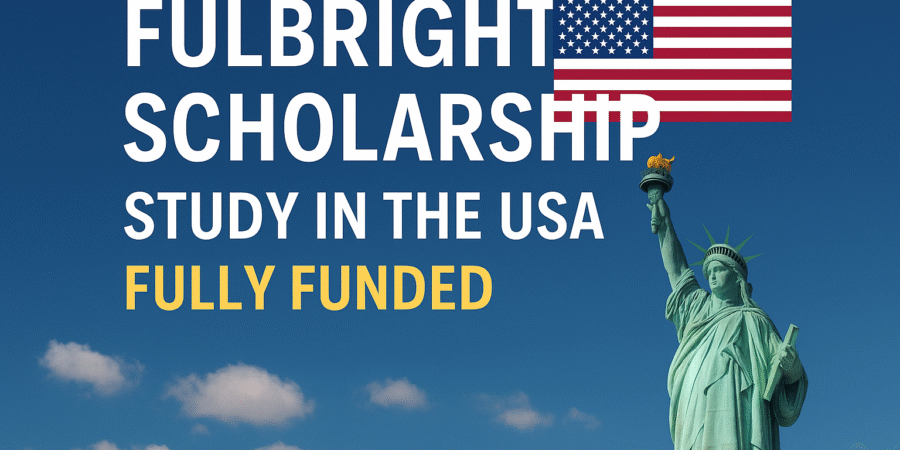
The Fulbright Scholarship is one of the most prestigious international exchange programs in the world. Established in 1946 and sponsored by the U.S. government, the program aims to promote mutual understanding between nations through educational and cultural exchange. Each year, thousands of outstanding students, professionals, and researchers from over 160 countries are given the opportunity to study, teach, or conduct research in the United States, all fully funded.
For Nigerian students dreaming of studying in the U.S., the Fulbright program is a golden opportunity to achieve that dream without financial burden.
What Is the Fulbright Scholarship?
The Fulbright Program was founded by Senator J. William Fulbright after World War II, with the goal of fostering peace and understanding among nations through academic exchange. Over the decades, the program has grown into a global network connecting more than 400,000 alumni, many of whom have become leaders in their fields including Nobel Prize winners, heads of state, ambassadors, and innovators.
The scholarship provides funding for graduate study, research, and teaching opportunities in the U.S. or abroad. Nigerian scholars typically apply under the Fulbright Foreign Student Program, designed for graduate students, young professionals, and artists.
Types of Fulbright Programs Available
The Fulbright Scholarship isn’t just one program; it’s a collection of programs that serve different categories of applicants. The most common include:
a. Fulbright Foreign Student Program
This program allows graduate students, young professionals, and artists from abroad to study and conduct research in U.S. universities. Nigerian students often apply for this category for master’s or Ph.D. studies.
b. Fulbright Visiting Scholar Program
This is intended for experienced Nigerian university lecturers or researchers who wish to conduct postdoctoral research or lecture at U.S. institutions.
c. Fulbright Teaching Excellence and Achievement Program (TEA)
This program targets secondary school teachers who wish to enhance their teaching skills and exchange ideas with U.S. educators.
d. Fulbright Scholar-in-Residence Program
This allows U.S. institutions to bring scholars from other countries to teach courses and promote international perspectives on campus.
Benefits of the Fulbright Scholarship
The Fulbright Program is fully funded, meaning that all major expenses are covered. Below are the key benefits:
Full tuition coverage for your entire study period.
Living stipend to cover accommodation and daily expenses.
Round-trip airfare between your home country and the U.S.
Health insurance for the duration of the program.
Textbook and research allowances.
Networking opportunities with global leaders and researchers.
In short, Fulbright takes care of everything, allowing scholars to focus fully on academics and research.
Eligibility Requirements for Nigerian Applicants
To apply for the Fulbright Scholarship from Nigeria, you must meet certain eligibility requirements. The most common ones include:
You must be a Nigerian citizen residing in Nigeria at the time of application.
You must hold at least a first degree (Bachelor’s degree) with strong academic records.
Applicants for the master’s program should have completed a bachelor’s degree.
Applicants for Ph.D. research should already be registered in a Ph.D. program in Nigeria.
Strong leadership potential and a commitment to returning home to contribute to national development.
Proficiency in the English Language, both spoken and written.
Please note that dual citizens of Nigeria and the U.S. are not eligible.
Fields of Study
Fulbright scholarships are available in nearly all academic disciplines, though priority areas may vary depending on the country’s needs. Nigerian applicants are encouraged to apply in fields such as:
Science, Technology, Engineering, and Mathematics (STEM)
Public Policy and Administration
Environmental Studies
Health Sciences
Education
Journalism and Media
International Relations
Agriculture and Food Security
Arts and Culture
The program does not fund clinical medical studies involving direct patient contact.
Application Process
Applying for the Fulbright Scholarship requires careful preparation and attention to detail. Here’s a step-by-step guide for Nigerian applicants:
Step 1: Visit the U.S. Embassy Website
Applications are coordinated through the Public Affairs Section of the U.S. Embassy in Abuja or the U.S. Consulate General in Lagos. Visit their official websites or the EducationUSA page for the latest announcement.
Step 2: Create an Online Application
All applications are submitted online through the official Fulbright application portal. You’ll need to provide:
Academic transcripts and certificates
Three letters of recommendation
Statement of purpose
Research proposal (for research candidates)
Curriculum Vitae (CV)
GRE/TOEFL test scores (if required)
Step 3: Interviews
Shortlisted candidates are invited for an interview at the U.S. Embassy or Consulate.
Step 4: Final Selection
Successful applicants are notified via email and then guided through visa and placement procedures.
Tips for a Strong Fulbright Application
Because the Fulbright Program is extremely competitive, it’s important to prepare a standout application. Here are some useful tips:
Start early: Begin preparing your documents months before the deadline.
Write a powerful personal statement: Focus on how your studies will benefit your community and Nigeria.
Get strong references: Choose referees who know your academic or professional abilities well.
Demonstrate leadership and impact: Fulbright values applicants who show they can make a difference.
Research U.S. universities: Identify programs that align with your research interests.
Deadline and Notification
The Fulbright application period for Nigerian applicants usually opens around February or March and closes by May each year. Results are typically announced later in the year, and successful candidates begin their programs in the following academic year (around August or September).
Life as a Fulbright Scholar
Being a Fulbright scholar goes beyond academics — it’s a cultural experience. Scholars attend conferences, community service programs, and cultural events, gaining exposure to diverse ideas and people. Many describe the experience as life-changing, as it opens doors to global opportunities and lifelong networks.
After completing the program, alumni return home with enhanced knowledge and leadership capacity, contributing to national growth in their respective fields.
How to Stay Updated
To get the latest updates, Nigerian applicants can visit:
Follow the U.S. Mission Nigeria social media pages for announcements.
Conclusion
The Fulbright Scholarship remains one of the best opportunities for Nigerian students, researchers, and professionals to gain world-class education and experience in the United States completely free.
If you have a passion for making an impact, a strong academic background, and a dream of studying in the U.S., then Fulbright could be your gateway to success.